
Pronouns as Direct Objects

A pronoun as a direct object replaces a noun used as a direct object in a sentence.
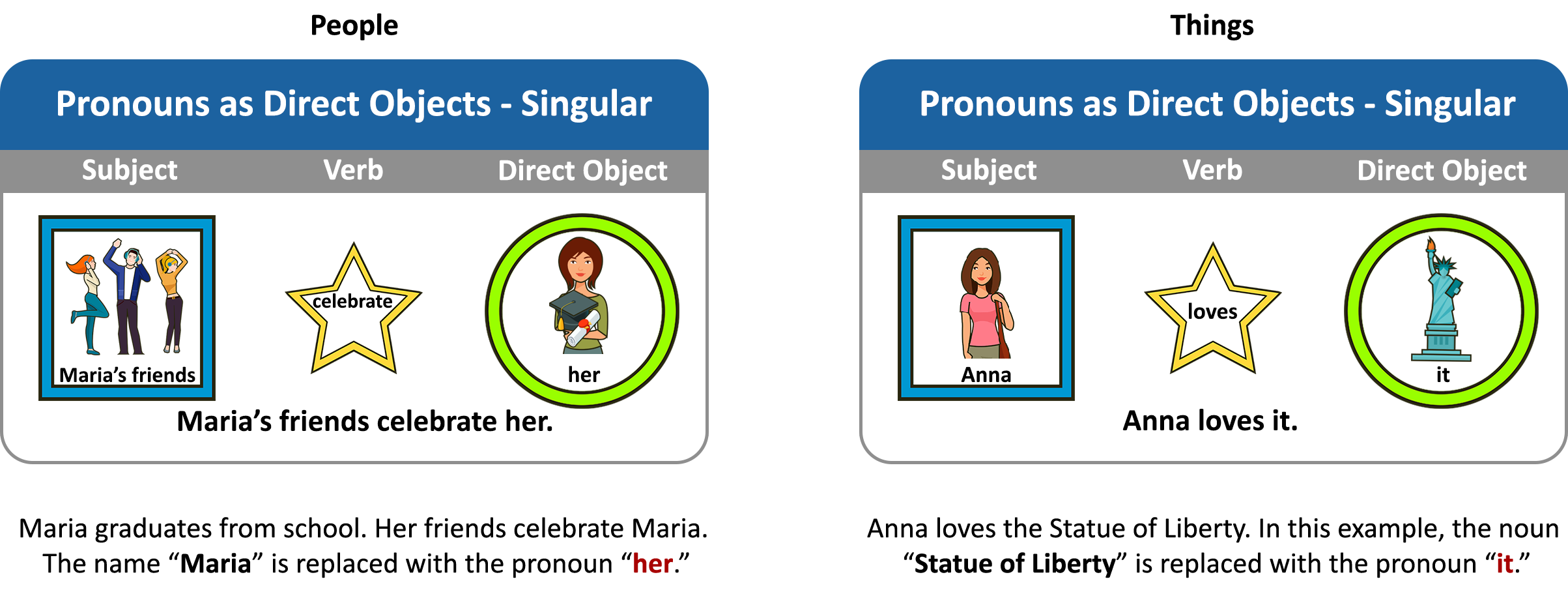
Me, you, him, her and it are singular pronouns used as direct objects.
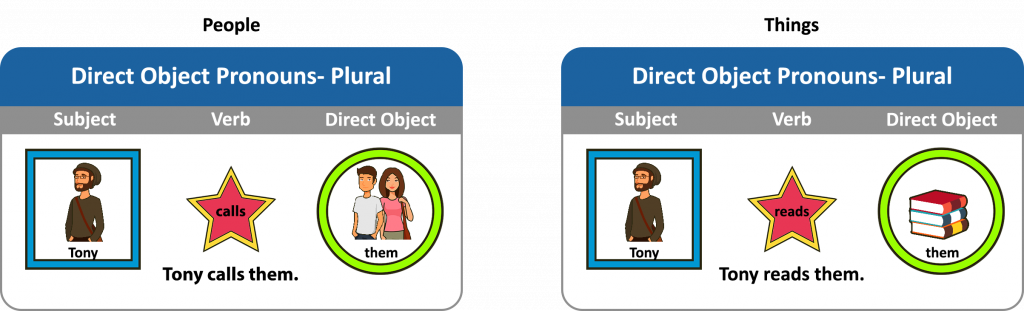
Tony Calls Ben and Anna. In this example, the names “Ben” and “Anna” are replaced with a pronoun “them”.
Tony reads books. “Books” is replaced with the pronoun “them”.
Us, you, and them are plural direct object pronouns.
In the following scenes, we use verb “to love” because this verb creates powerful, memorable examples:
Me – Singular Pronoun
Us – Plural Pronoun

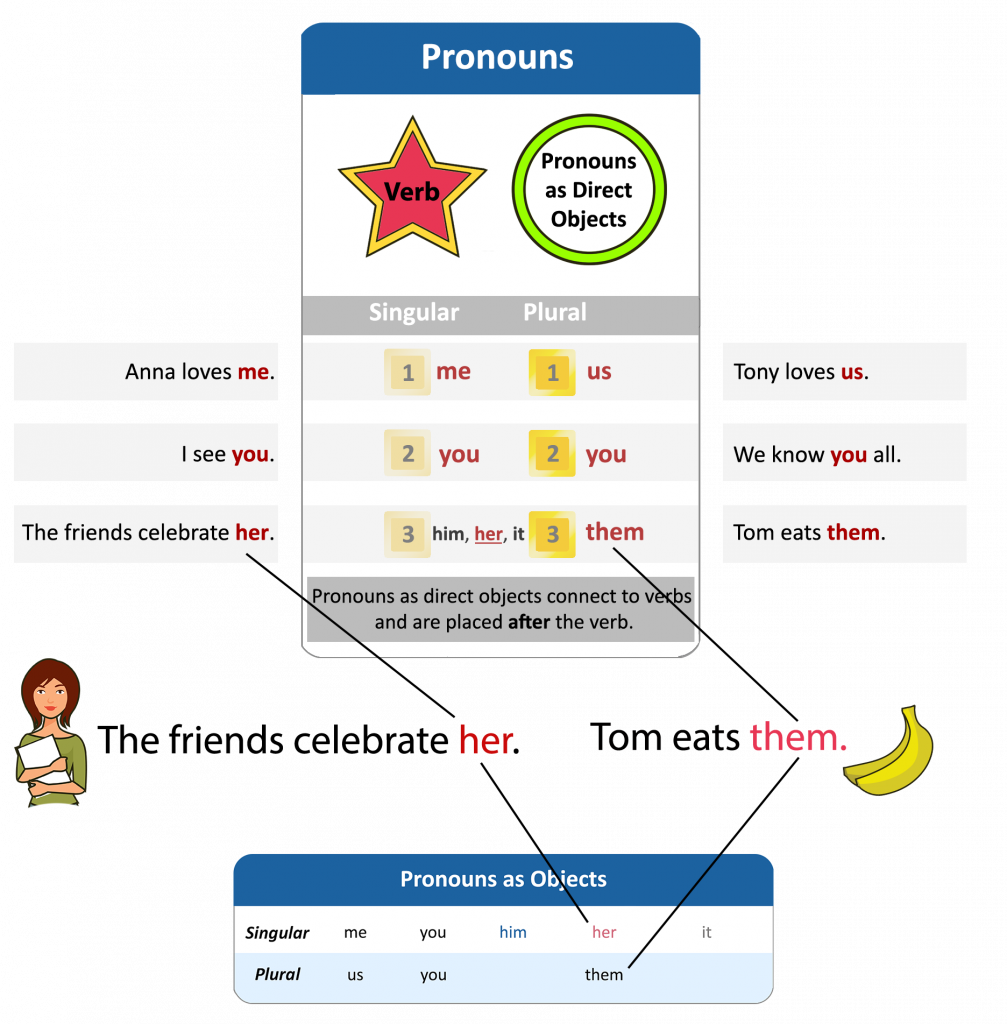
For example, when you see a sentence like, “Maria’s friends celebrate her,” this chart will help you locate “her” in the chart and identify “her” as a direct object pronoun.
Revisiting Interrogative Pronouns
The Wh- Confusion
Student question: Why is the question word (pronoun) whom not covered in this lesson?

Many native English speakers use “who?” in place of “whom?”; it is difficult to understand as a rule.
Remember this general rule: Who is a question word asking for the subject. Whom is a question word asking for a direct object.
Are you ready for a bonus? Me, you, her, it, us, them used as direct object pronouns show up again. But, this time they connect to a preposition.